جغرافیا و روابط انسانی

جغرافیا و روابط انسانی

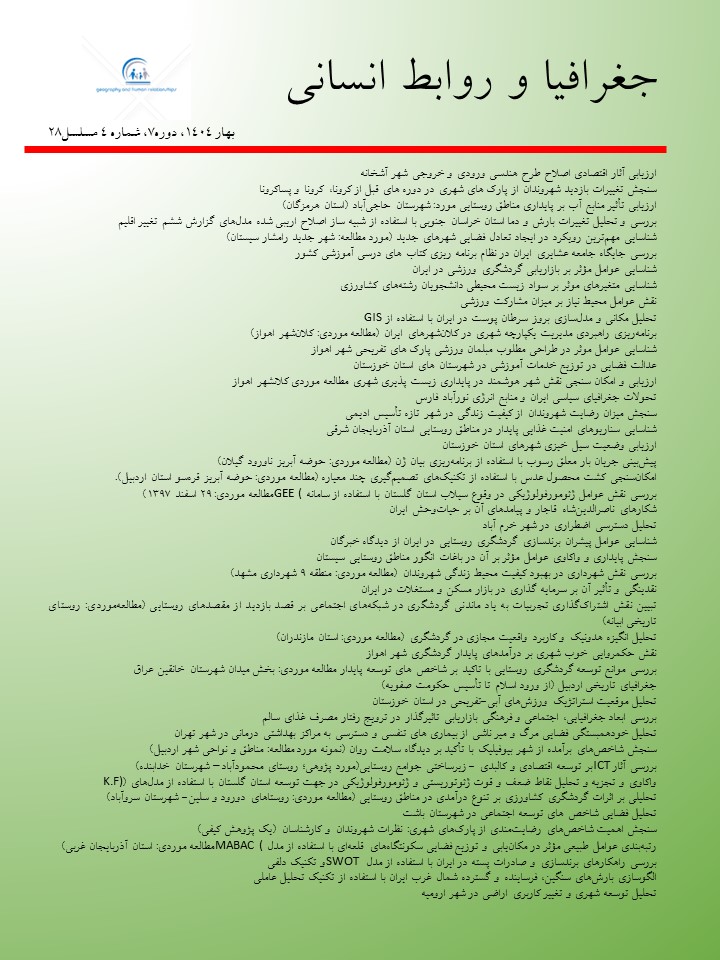
نقش عوامل محیط نیاز بر میزان مشارکت ورزشی

نوع مقاله : پایان نامه و رساله

نویسندگان
1 گروه رفتار حرکتی، دانشکده تربیت بدنی و علوم ورزشی، دانشگاه تبریز، تبریز، ایران.
2 گروه رفتار جرکتی، دانشکده تربیت بدنی و علوم ورزشی، دانشگاه تبریز، تبریز، ایران.
چکیده
هدف از پژوهش حاضر، بررسی نقش عوامل محیط نیاز بر میزان مشارکت ورزشی بود. روش پژوهش حاضر، کاربردی از نوع پژوهش‌های کیفی با روش تحلیل تماتیک است. جامعه آماری پژوهش شامل، اساتید جغرافیا و برنامه‌ریزی روستایی، اساتید برنامه‌ریزی توسعه شهری، اساتید علوم ورزشی، پژوهشگران دکتری علوم ورزشی و برنامه‌ریزی شهری بودند و نمونه آماری از بین اعضای جامعه با بهره‌گیری از روش نمونه‌گیری هدفمند و گلوله برفی انتخاب شدند. ابزار پژوهش مصاحبه نیمه ساختاریافته با 15 نفر از متخصصان پژوهش که تا مرحله اشباع نظری ادامه یافت، مصاحبه‌ها به صورت نیمه ساختاریافته با نمونه‌های آماری با هماهنگی و زمان‌بندی قبلی انجام شد. در پژوهش حاضر با 15 نفر مصاحبه انجام شد که از مصاحبه دهم به بعد، تکرار در اطلاعات دریافتی مشاهده گردید و از مصاحبه سیزدهم به بعد داده‌ها کاملاً تکراری و به اشباع نظری رسید اما برای اطمینان تا مصاحبه‌ها تا نفر پانزدهم ادامه یافت. روایی پژوهش توسط متخصصان مربوطه مورد بررسی و تأیید قرار گرفت و پایایی پژوهش با استفاده از روش توافق درون موضوعی 86 درصد به دست آمد. نتایج پژوهش نشان دادند که 73 کد اولیه در قالب 12 مفهوم و 4 مقوله اصلی شامل عوامل زیست‌محیطی، الزامات زیست‌محیطی، عوامل مدیریتی و سیاست‌گذاری و عوامل توسعه پایدار سازمان‌دهی شدند؛ بر این اساس، بهبود زیرساخت‌های زیست‌محیطی، تدوین و اجرای سیاست‌های پایدار، ارتقای مدیریت ورزشی، و افزایش آگاهی عمومی می‌تواند نقش مهمی در افزایش مشارکت ورزشی داشته باشد.
کلیدواژه‌ها

موضوعات


عنوان مقاله English

The Role of Environmental Need Factors in the Level of Sports Participation

نویسندگان English

Behzad Behzadnia 1
Laith Jabbar Atiyah 1
SeyedHojat ZamaniSani 2
1 Motor Behavior Department, Faculty of Physical Education,Tabriz University,Tabriz
2 University of Tabriz, Faculty of Physical Education and Sport Sciences, Department of Motor Behavior, Tabriz, Iran.
چکیده English

The aim of this study was to examine the role of environmental need factors in the level of sports participation. The research employed an applied qualitative approach using thematic analysis. The statistical population included professors of geography and rural planning, urban development planning experts, sports sciences faculty members, and PhD researchers in sports sciences and urban planning. The sample was selected using purposive and snowball sampling methods. Data were collected through semi-structured interviews with 15 research experts until theoretical saturation was reached. The interviews were conducted in a semi-structured manner with prior coordination and scheduling. In this study, interviews were conducted with 15 participants, and from the tenth interview onward, repetition in the received information was observed. By the thirteenth interview, the data had become completely repetitive, reaching theoretical saturation; however, to ensure reliability, the interviews continued up to the fifteenth participant. The validity of the study was reviewed and confirmed by relevant experts, and the reliability, assessed using the intra-subject agreement method, was determined to be 86%. The findings revealed that 73 initial codes were categorized into 12 concepts and four main themes: environmental factors, environmental requirements, managerial and policy-making factors, and sustainable development factors. Accordingly, improving environmental infrastructure, developing and implementing sustainable policies, enhancing sports management, and increasing public awareness can play a significant role in promoting sports participation.

کلیدواژه‌ها English

Environmental Need Factors
Participation
Sports Participation
Thematic Analysis
  • اختیاری، نرگس؛ عیدی، حسین؛ شعبانی‌مقدم، کیوان. (1397). "تبیین مدل عوامل اثر‌گذار بر توسعه فرهنگ محیطزیست در ورزش". فصلنامه علمی پژوهش‌های کاربردی در مدیریت ورزشی، 7(2)، 57-67. doi: 10.30473/arsm.2018.5090.
  • امیرحسینی، سید احسان؛ گودرزی، صمد؛ کیانی، مجید؛ عسگری، روح‌الله. (1400). "واکاوی نقش مسائل اجتماعی و فرهنگی در توسعه به‌کارگیری انرژی سبز در اماکن ورزشی". مطالعات مدیریت ورزشی، 13 (68)، 301-334. doi: 10.22089/smrj.2020.8941.3040
  • خدادادی، محمدرسول؛ بدری‌آذرین، یعقوب؛ شهبازی، رضا؛ پاشازاده، شبنم. (1403). شناسایی عوامل مؤثر بر طراحی و ساخت اماکن ورزشی سبز. رویکردهایی نوین در مدیریت ورزشی، 12 (46)، doi: 10.22034/ntsmj.2024.718995
  • دهقان قهفرخی، امین؛ شهبازی، رضا؛ سیف اللهی، عباس. (1399). "گونه‌شناسی رفتارهای سبز در اماکن ورزشی". مطالعات مدیریت رفتار سازمانی در ورزش، 7 (1)، 79-93. doi: 10.30473/fmss.2020.50463.2065
  • شکوهی‌فرد، سیامک؛ سلمانپور زنوز، علی؛ حاضری نیری، هاتف. (1403). "اثرات مصرف انرژی و بخش مالی بر آلودگی محیطزیست مطالعه موردی: ایران". جغرافیا و روابط انسانی، 7 (3)، 172-188. doi: 10.22034/gahr.2024.435341.2032.
  • شهبازی، رضا؛ خدادادی، محمدرسول؛ بدری آذرین، یعقوب؛ حیدری چیانه، رحیم. (1403). "شناسایی عوامل مؤثر بر مدیریت عملکرد خدمات گردشگری ورزشی". جغرافیا و روابط انسانی، 7 (3)، 337-354. doi: 10.22034/gahr.2025.485029.2357.
  • کبودانی، سمانه؛ آزادفدا، شیوا؛ زارعیان، حسین. (1400). "شناسایی راهبردهای توسعه اماکن ورزشی سبز و زیر ساخت‌های آن". مطالعات راهبردی ورزش و جوانان، 20 (53)، 285-308. doi: 10.22034/ssys.2021.468.
  • گودرزی، صمد؛ باقری، قدرت الله؛ یزدانی، حمیدرضا.(1400). "طراحی مدل عوامل مؤثر بر توسعه به‌کارگیری انرژی تجدیدپذیر در اماکن ورزشی ایران". نشریه مدیریت ورزشی، 13(1)، 161-181. doi: 10.22059/jsm.2019.264481.2146.
  • Biswas, A., Roy, M. (2015). “Green products: an exploratory study on the consumer behaviour in emerging economies of the East”. Journal of Cleaner Production, 87 (15), 463 -468. https://doi.org/10.1016/j.jclepro.2014.09.075.
  • Borin Norm, Douglas C.Cerf, R. Krishnan. (2011). “Consumer effects of environmental impact in product labeling”. Journal of Consumer Marketing. 28(1), 76-86. https://doi.org/10.1108/07363761111101976.
  • Chen, Q., Liu, T. (2022). “The Effectiveness of Community Sports Provision on Social Inclusion and Public Health in Rural China”. Int. J. Environ. Res. Public Health, 17 (597), 1 -13. https://doi.org/10.3390/ijerph17020597.
  • Eather, N., Wade, L., Pankowiak, A., & Eime, R. (2023). The impact of sports participation on mental health and social outcomes in adults: a systematic review and the ‘Mental Health through Sport’conceptual model. Systematic reviews, 12(1), 102.‏ https://doi.org/10.1186/s13643-023-02264-8.
  • Emmonds, S., Till, K., Weaving, D., Burton, A., & Lara-Bercial, S. (2024). Youth sport participation trends across Europe: implications for policy and practice. Research quarterly for exercise and sport, 95(1), 69-80.‏ https://doi.org/10.1080/02701367.2022.2148623.
  • Higham, J., Vada, S. (2024). “The state-of-the-art in sport tourism geographies”. Tourism Geographies, 1–14. https://doi.org/10.1080/14616688.2024.2373875.
  • Hoffmann, M. D., Barnes, J. D., Tremblay, M. S., & Guerrero, M. D. (2022). “Associations between organized sport participation and mental health difficulties: Data from over 11,000 US children and adolescents”. PLoS one, 17(6), e0268583. https://doi.org/10.1371/journal.pone.0268583.
  • Jha, B., Shalwee, A.,Verma, S., Chaudhari, P. (2016). “Green Buildings Concept towards Sustainable Urban Development and Panacea for Global Warming”. International Journal of Latest Research in Engineering and Technology (IJLRET), 2 (1), 35-41.
  • Kozma, G., Radics, Z., Teperics, K. (2022). “The Role of Sports Facilities in the Regeneration of Green Areas of Cities in Historial View: The Case Study of Great Forest Stadium in Debrecen, Hungary”. Buildings, 12, 714. https://doi.org/10.3390/buildings12060714. https://doi.org/10.3390/buildings12060714.
  • Marcen, C., Piedrafita, E., Oliván ,R., Arbones, I. (2022). “Physical Activity Participation in Rural Areas: A Case Study”. Int. J. Environ. Res.Public Health, 19, 1161. https://doi.org/10.3390/ ijerph1903116. https://doi.org/10.3390/ijerph19031161.
  • Mwakasangula, E. (2023). “Assessment of Community Engagement and Success of Education Projects in Tanzania: A Case of Changarawe Village, MorogoroSocial Sciences”. Humanities and Education Journal, 4 (1), 60-72. https://doi.org/10.25273/she.v4i1.15746.
  • O’Connor, J., Alfrey, L., & Penney, D. (2024). Rethinking the classification of games and sports in physical education: A response to changes in sport and participation. Physical Education and Sport Pedagogy, 29(3), 315-328.‏ https://doi.org/10.1080/17408989.2022.2061938.
  • Yixiang, Z., Shiqi, X., Guanghui, Z. (2019). “User continuance of a green behavior mobile application in China: An empirical study of Ant Forest”. Journal of Cleaner Production, 42 (1), 1-8. https://doi.org/10.1016/j.jclepro.2019.118497.

  • تاریخ دریافت 15 اسفند 1403
  • تاریخ بازنگری 16 فروردین 1404
  • تاریخ پذیرش 31 فروردین 1404